The Visual Similarity Was Real
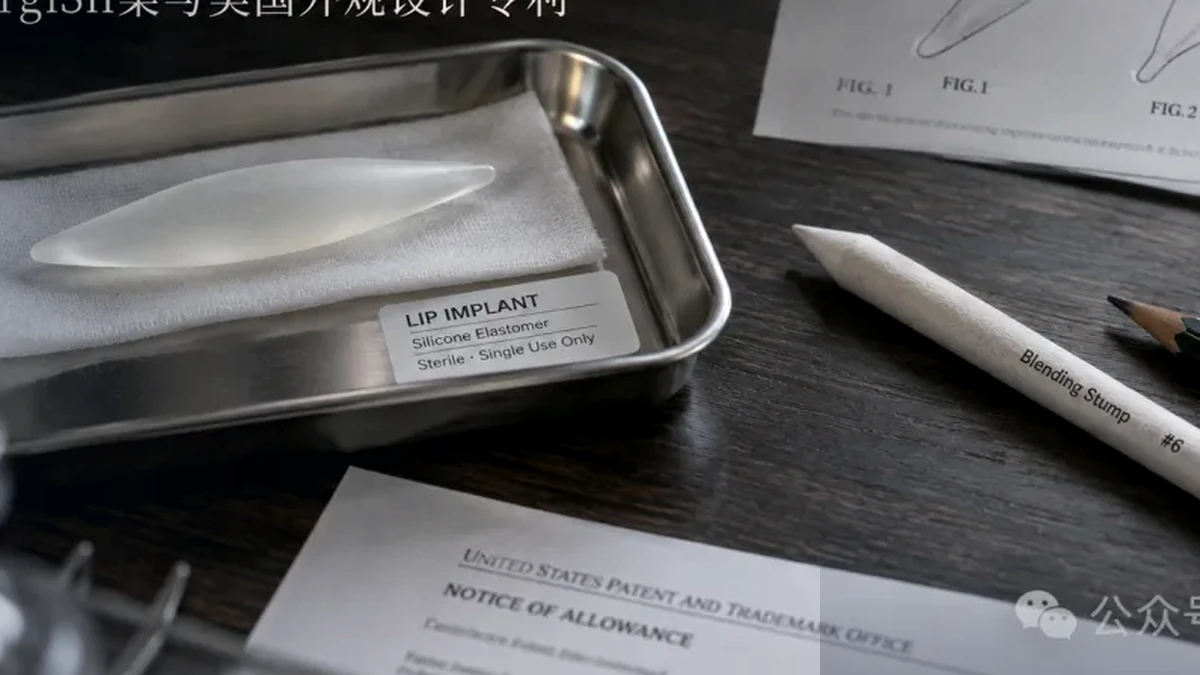
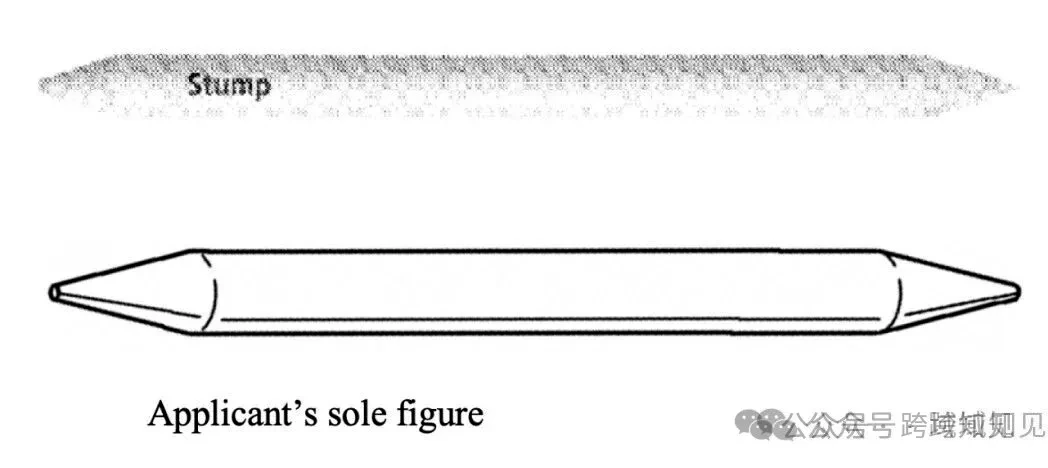
SurgiSil sought a U.S. design patent claiming the ornamental design for a lip implant, as shown and described. The examiner cited a Dick Blick catalog showing a paper blending stump used by artists to smudge and blend pastel or charcoal.
Side by side, the two objects look surprisingly close. Both are long and narrow, taper at both ends, and have a fuller central section. The examiner rejected the claim for anticipation under 35 U.S.C. §102, and the Patent Trial and Appeal Board affirmed.
Why the PTAB Thought the Art Tool Was Enough
The Board treated the identity of the article as largely irrelevant to anticipation. In its view, the novelty inquiry could focus on whether the design itself had already been disclosed, without giving controlling weight to the fact that SurgiSil claimed a lip implant while the reference showed an artist’s tool.
The Board also rejected the idea that anticipation required the prior design to come from an analogous field. On that approach, the visual similarity between the two shapes could carry the rejection.
The Federal Circuit Reversed on Claim Scope
The Federal Circuit disagreed. In its October 4, 2021 precedential decision, the court held that the Board’s anticipation finding rested on an erroneous interpretation of the claim’s scope.
The key proposition is simple:
It is limited to the article of manufacture identified in the claim.
SurgiSil’s claim identified a lip implant. Its drawing depicted a lip implant. The prior-art reference depicted a blending stump—an artist’s tool—not a lip implant. The problem with the PTAB’s decision was therefore not that it compared the drawings poorly. It started from the wrong understanding of what the claim covered.
The Rule Is Now Expressly Reflected in the MPEP
MPEP §1502 states that a design is inseparable from the article to which it is applied and cites In re SurgiSil for the proposition that a design claim is limited to the article of manufacture identified in the claim. The USPTO’s design-examiner training materials likewise instruct examiners not to disregard claim language when making an anticipation rejection.
This matters because U.S. design patents are often discussed as if they protect “the picture.” They do not. The drawings are essential, but the design exists in relation to an identified article of manufacture.
The Product Name Is Not a Throwaway Formality
That also gives practical importance to the title and claim language in a design application. Under 37 C.F.R. §1.153 and MPEP §1503.01, the title must designate the particular article, and the claim is formally directed to the ornamental design for the named article as shown, or as shown and described.
The MPEP further explains that the title identifies the article by the name generally known and used by the public, may contribute to defining claim scope, and helps determine the field of prior-art search and classification.
For applicants, that creates a drafting tradeoff. A title that is unnecessarily narrow can introduce avoidable limitations. A title that is so broad that the article’s nature becomes unclear can create different problems. The right question is not “How broad can the title be?” but “What article is actually shown, what competing products matter, and what scope will still make sense during examination and enforcement?”
A Practical Office Action Response Point
When a design examiner cites a visually very close reference, the natural first move is to compare the drawings: contour, proportions, surface ornamentation, and overall visual impression.
SurgiSil adds an earlier question:
What article of manufacture does the reference actually disclose?
If the cited design is applied to a clearly different article, the dispute may not be only whether the visual differences are large enough. For a §102 anticipation rejection, there may be a claim-scope problem before the visual comparison even becomes dispositive.
The Hard Cases Are the Middle Cases
SurgiSil involved an unusually clean contrast: a lip implant and an artist’s tool are plainly different products. The decision does not supply a mechanical formula for deciding how specific the article category must be in every case.
The harder disputes arise when the products are related at different levels of abstraction. A claimed “handle” may appear on many kinds of products. A claimed “medical device” may encompass a more specific article. Different names do not automatically mean different articles, and identical wording does not automatically answer the scope question either.
The analysis still has to return to the claim language, the drawings, and the article actually depicted.
Do Not Turn SurgiSil into a Universal §103 Rule
Another important boundary is that SurgiSil directly addressed anticipation under §102. It does not mean that every design reference used in an obviousness rejection under §103 must depict the exact same product.
After the Federal Circuit’s 2024 en banc decision in LKQ Corp. v. GM Global Technology Operations LLC, the USPTO applies a more flexible obviousness framework. Current USPTO guidance says a primary reference will typically be in the same field of endeavor as the claimed article of manufacture, but it need not be if it qualifies as analogous art. The same analogous-art inquiry applies to secondary design references.
So the practical distinction is important:
- §102 / SurgiSil: do not ignore the article of manufacture identified in the design claim.
- §103 / LKQ: the prior-art inquiry is broader and more flexible, but references still must fall within the relevant scope of analogous design art.
And Infringement Is a Separate Inquiry Again
Design-patent infringement has its own legal framework, so the §102 rule from SurgiSil should not simply be copied into an infringement analysis. But the same underlying caution remains useful: a U.S. design patent is not an image floating free of the product to which the design is applied.
For cross-border sellers evaluating U.S. design patents, a photo-to-drawing comparison is therefore only part of the work. The analysis should also identify exactly what article is claimed and how that identification affects the legally relevant comparison.
Takeaway
SurgiSil corrected a very intuitive but incomplete way of thinking about design patents. Yes, visual appearance is central. But U.S. design-patent novelty is not simply a contest between two silhouettes.
The drawing may show a pen, a door, a lip implant, or another product. Sometimes what the object is is itself part of understanding what the claim covers.
Looking the same does not necessarily make it the same design as a matter of law.