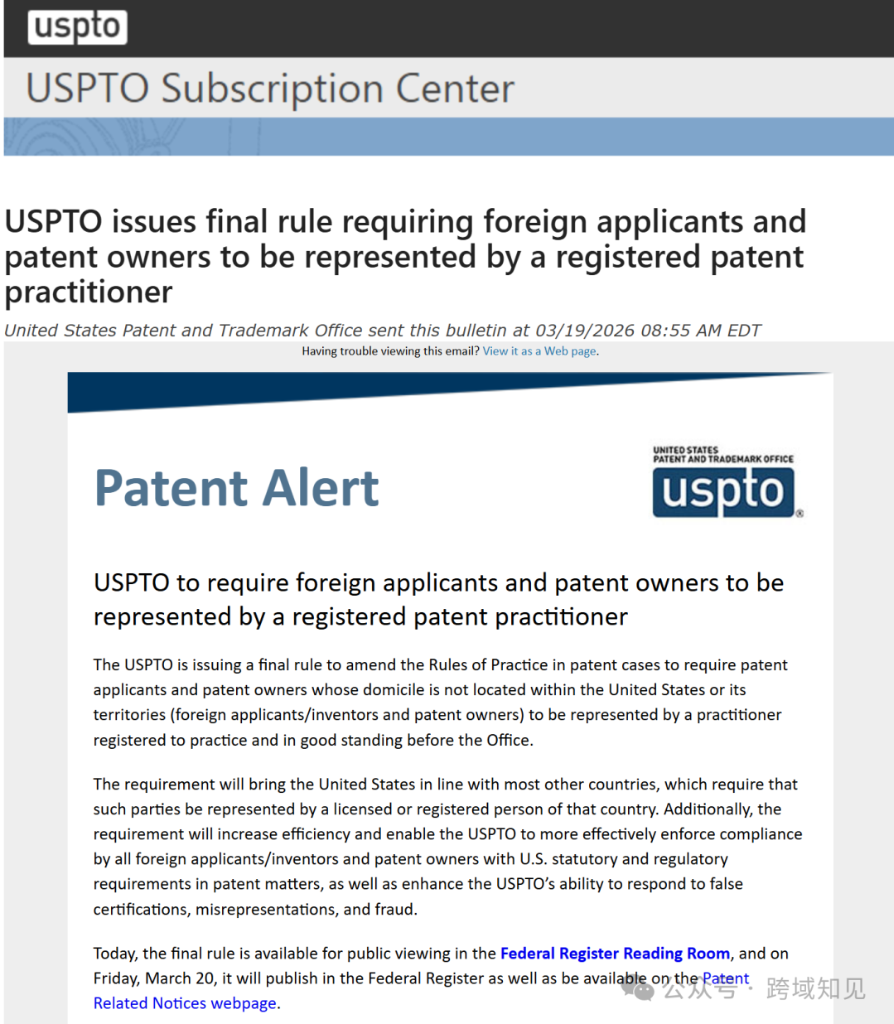
From Proposal to Final Rule
The USPTO had previewed this requirement in a Notice of Proposed Rulemaking (NPRM) issued in late 2025. During the public comment period, the Office received nine substantive comments. The majority were broadly supportive; most raised questions about transition period length, definitional edge cases, and implementation logistics. Only one comment directly opposed the rule on grounds that it imposed an unfair burden on foreign applicants. The USPTO addressed each comment in the final rule preamble —and then adopted the rule essentially as proposed, without material changes.
What the Rule Requires
The rule is broad by design. Any person or entity whose domicile —or, for businesses, principal place of business —is located outside the United States must appoint and be represented by a practitioner registered to practice before the USPTO and in good standing. The requirement applies across all patent types: utility, design, and plant patents, at all stages of prosecution, both pre-grant and post-grant.
After the effective date, any document that requires a practitioner signature under the new rule —amendments, responses, IDS submissions, petitions —will not be entered into the application file if submitted without a registered U.S. practitioner's signature. The document is treated as if it was never filed.
The Application Data Sheet (ADS) Trap
The most consequential enforcement mechanism involves the Application Data Sheet. If a foreign applicant files an ADS without a U.S. practitioner's signature, the USPTO will downgrade it to a transmittal letter —a clerical filing acknowledgment with no legal operative effect. This has cascading consequences:
- Inventor identification on the ADS will not be confirmed
- Priority claims and benefit claims listed on the ADS will not take effect
- If a compliant ADS is later filed outside the relevant deadline windows, the applicant must separately file a Petition for Delayed Benefit Claim or a Petition for Delayed Priority Claim —each requiring additional fees and substantive justification
The rule explicitly preserves the ability of a foreign applicant to obtain a filing date without U.S. practitioner involvement. A foreign applicant may still file the application itself and pay the filing fee pro se. However, the ADS and every subsequent document filed in that application must carry a registered practitioner's signature. In operational terms: you can get in the door alone, but every step after that requires representation.
Defined Exceptions
The rule carves out a limited set of transactions that remain outside the representation requirement:
Why USPTO Pushed This Through
The final rule preamble articulates two distinct policy objectives. Understanding both is important because each is driving a different compliance problem the Office has been unable to address under the current framework.
Problem One: False Certifications and Fraud
The Office reports that in recent years it has identified a significant volume of fraudulent filings originating from foreign applicants operating without U.S. practitioners. The most prevalent pattern involves false micro-entity status certifications —applicants checking the micro-entity box when they do not qualify —resulting in fee underpayments that directly reduce the Office's revenue. A related pattern involves false certifications on petitions for accelerated examination, which allow non-qualifying applicants to jump the examination queue at the expense of legitimate applicants.
The fundamental enforcement obstacle is geographic: the USPTO cannot independently verify the claimed status of an overseas applicant, and it has limited authority to compel cooperation or impose consequences once a foreign applicant abandons an application. A registered U.S. practitioner changes this calculus entirely. The practitioner must sign the certifications, is subject to USPTO disciplinary proceedings under 37 C.F.R. Part 11, and is required to cooperate with Office investigations. The chain of accountability —which currently breaks down when a foreign applicant walks away —now has a U.S.-domiciled, licensed professional at the end of it.
The USPTO cannot effectively pursue a foreign applicant who abandons a matter after submitting false certifications. It can pursue a registered practitioner who signed those documents. The new rule converts a jurisdictional gap into a supervisory link.
Problem Two: Examination Resource Drain
The preamble also identifies the examination efficiency problem: applications filed without professional drafting assistance frequently arrive with formal deficiencies, fail to meet publication or examination readiness conditions, and consume disproportionate examiner time on procedural objections rather than substantive review. Mandatory practitioner involvement at the filing and prosecution stages is expected to raise baseline document quality and reduce that overhead.
How Many Applicants Are Actually Affected?
The actual scope of impact is considerably smaller than the rule's broad drafting might suggest. The Office's own data from FY 2022 tells the story clearly.
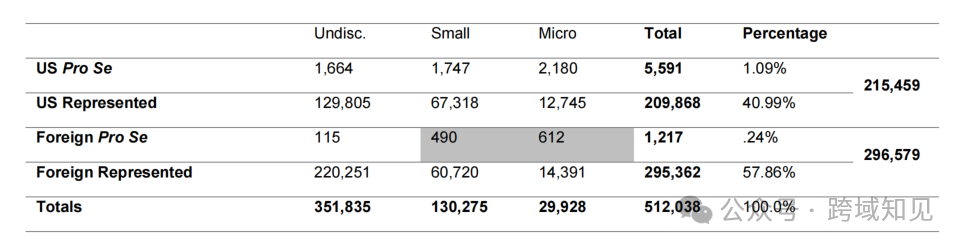
patent applications (FY22)
by U.S. practitioners
affected by new rule
In other words: the rule is aimed at less than half of one percent of foreign patent filings. The overwhelming majority of foreign applicants —including virtually all corporate patent filers —are already in compliance with the new requirement before it takes effect. The practical disruption is real but narrow in scope.
Among the 1,217 affected pro se foreign applicants, the breakdown by entity size is revealing: 490 filed as small entities and 612 as micro entities —a combined 1,102 small-and-micro-entity filers who had elected to file pro se precisely to avoid U.S. practitioner fees. That cost-avoidance path is now closed.
The Cost Reality
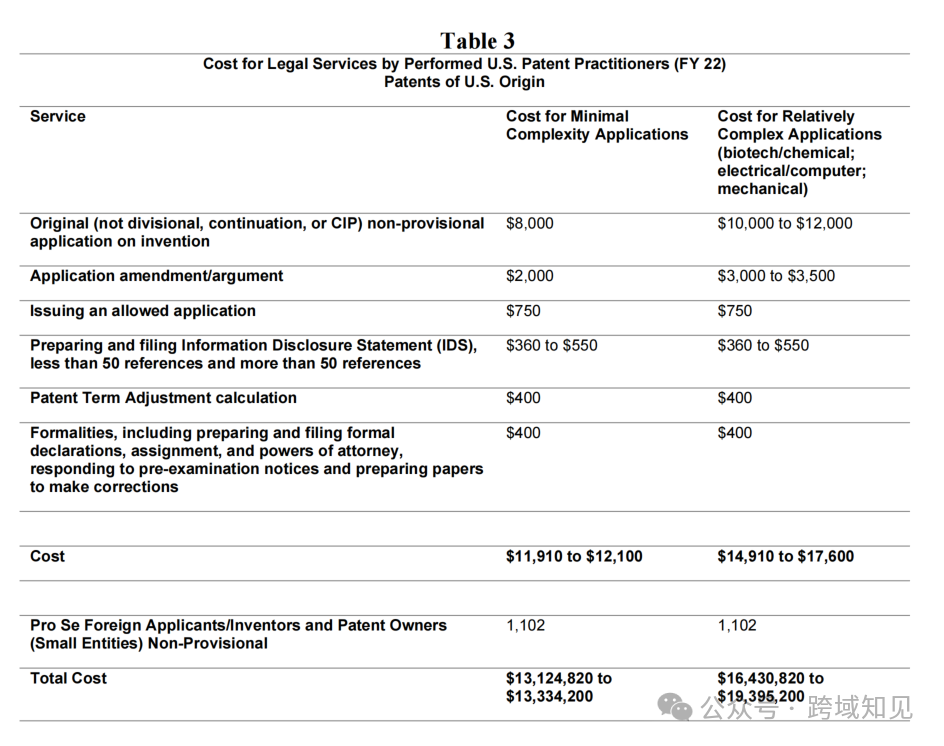
The USPTO's economic analysis, drawing on AIPLA 2023 survey data, distinguishes two cost scenarios for the affected applicants —and the difference is substantial.
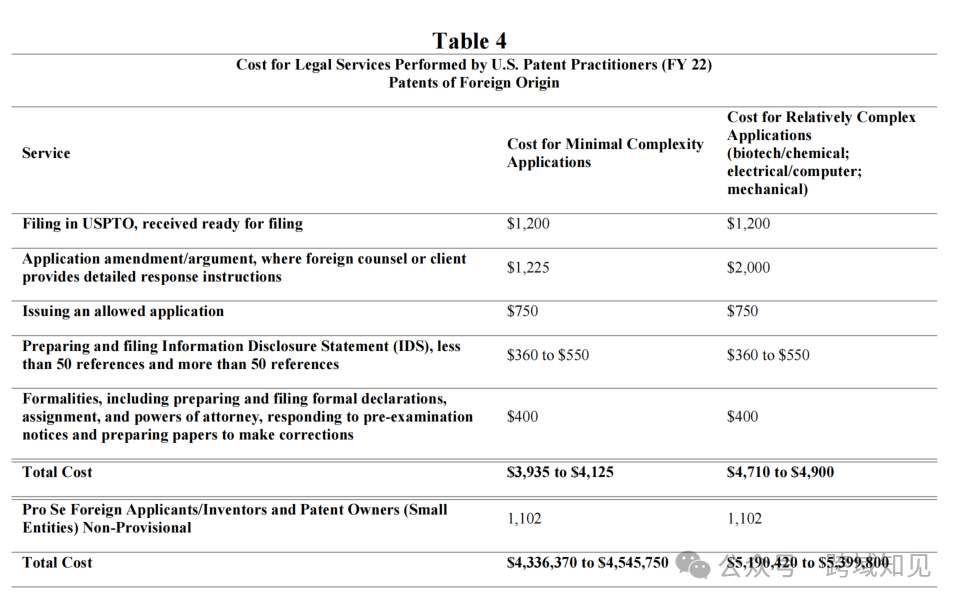
Foreign counsel directs; U.S. practitioner files and handles formalities
U.S. practitioner independently leads all prosecution activity
For Chinese applicants working through established domestic IP firms —the standard workflow —Model A is the relevant benchmark. In this model, the domestic firm provides substantive technical and strategic direction; the U.S. practitioner handles filing, procedure, and formal document execution. The incremental cost is $3,935–4,900 per application, which for most corporate filers is already embedded in the engagement cost. For the small number of individual inventors or small companies who had been filing pro se specifically to avoid this expense, the new rule eliminates that option.
What This Means for Chinese Practitioners and Their Clients
The rule's practical effects on the Chinese IP services market are less dramatic than initial reactions might suggest, but they are real in specific areas.
Cost Transparency Becomes Non-Negotiable
Every case handled for a Chinese client involving USPTO prosecution now has a mandatory U.S. practitioner component. For firms that were already routing all work through established U.S. correspondence partners, nothing changes operationally. For any firm that was structuring matters to avoid this cost —whether by facilitating pro se filings or using unregistered intermediaries —the rule closes that path definitively after July 2026.
The practical implication is straightforward: U.S. practitioner fees must be disclosed clearly as a line item in every client engagement covering USPTO prosecution. The days of absorbing or obscuring this cost are over for the affected minority of practices.
Compliance Risk Concentrates Around Signatures
The rule's enforcement is signature-based. A document without a compliant U.S. practitioner signature is not entered. This places the accountability squarely on the registered practitioner who signs —and by extension on the domestic firm that is the conduit between the client and the U.S. practitioner. The chain of professional responsibility now connects the client's matter directly to a U.S.-licensed professional who is subject to USPTO disciplinary jurisdiction.
This is precisely the accountability the rule is designed to create, and it will make certain historically common non-compliance patterns much harder to sustain. Schemes involving unauthorized signature, misrepresented entity status, or false certification now create exposure not just for a distant foreign party but for a U.S.-registered practitioner whose license is at stake.
The Competitive Landscape Rebalances
For Chinese domestic IP firms that have operated in full compliance with U.S. representation requirements —working through established U.S. counsel, maintaining proper engagement protocols, accurately certifying entity status —the new rule is a structural positive. It eliminates a cost advantage previously available to non-compliant competitors and restores the competitive baseline to one grounded in professional quality and U.S. counsel relationships rather than fee arbitrage. The firms that invested in building reliable U.S. partner networks are better positioned after July 2026 than before it.
Pre-Effective Date Checklist
Practitioners and their clients with pending or anticipated USPTO matters should review the following before July 20, 2026:
- Audit pending pro se foreign filings. Identify any application where a foreign applicant is currently appearing without U.S. practitioner representation. Appoint counsel proactively before the effective date rather than waiting for a non-compliant filing to be rejected.
- Review ADS status in pending applications. Confirm that any ADS filed by a foreign applicant without practitioner signature has been or will be cured by a compliant ADS before any deadlines for priority or benefit claims expire.
- Verify entity status certifications. This is the right moment to audit micro-entity and small-entity certifications for all pending matters. Existing false certifications do not become retroactively cured —but proactive correction now is better than discovery later.
- Update client engagement agreements. Ensure that U.S. practitioner fees are explicitly disclosed and allocated in all client-facing agreements covering USPTO prosecution matters prospectively.
- Confirm PCT national-phase timing. The PCT international phase itself is exempt, but entry into the U.S. national phase triggers representation requirements for all subsequent filings. Plan accordingly for applications in the international phase approaching 30-month deadlines.